
Start where the grain leaves the cleaner
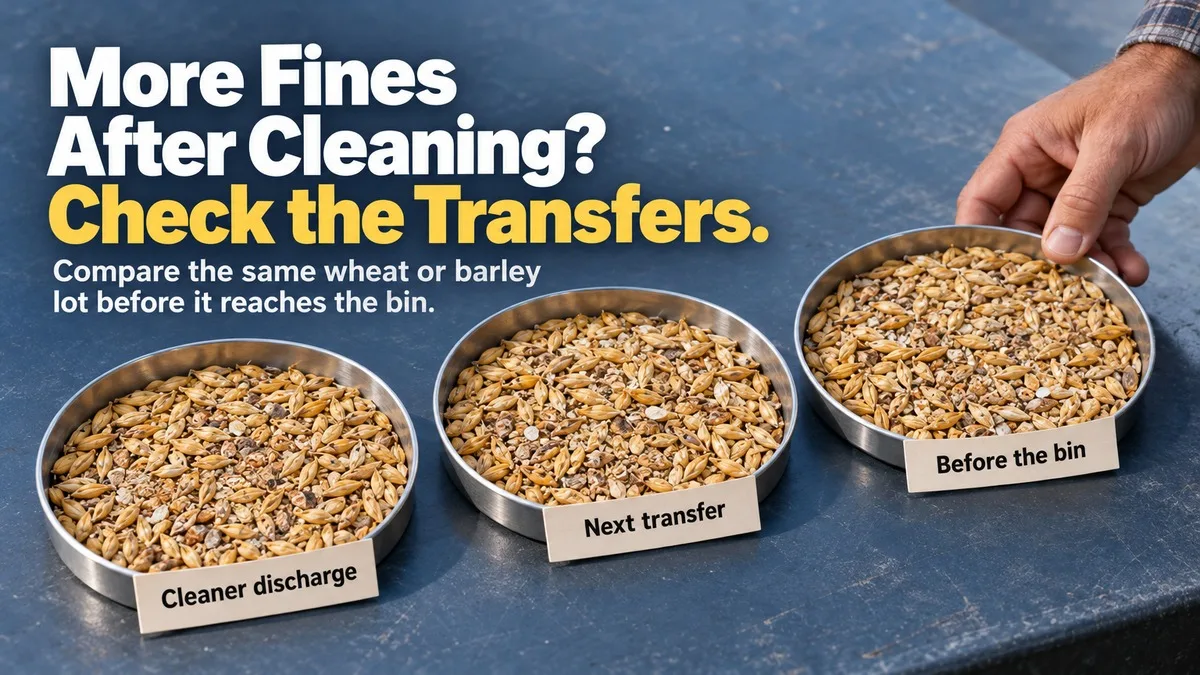
If wheat or barley has more fines—small grain fragments and other fine material—by the time it reaches storage, follow the same lot from cleaner discharge toward the bin. Comparing visible broken kernels and fines at successive discharge points can help narrow the search to a handling section instead of immediately changing the cleaner.
Compare along the route, safely
Keep comparisons outside bins and away from moving equipment. Use only safely accessible discharge points; do not reach into machinery or remove guards to obtain material. Shut down and lock out equipment before close inspection. Minnesota Extension’s grain-bin safety guidance emphasizes working outside bins and shutting down and locking out grain-handling equipment.
Use this qualitative comparison to guide the investigation:
1. Start with grain leaving the cleaner. Note the visible broken kernels and fines already present.
2. Follow the same lot through successive safely accessible discharge points. Keep track of where each comparison came from.
3. Look for the first point where broken kernels or fines appear more noticeable. Focus attention on the handling section between that point and the preceding one.
For example, if grain looks similar at cleaner discharge and the next transfer, but shows more fragments after a later auger, investigate that later section first. The visible change is a clue, not a measured breakage rate or proof that one machine caused it.
A fines-rich bin sample can mislead you
Fines collect in pockets during bin filling and restrict airflow, according to Minnesota Extension’s wheat and barley storage guidance. A fines-rich sample from one bin location may reflect that concentration rather than a sudden increase in breakage. It cannot tell you which transfer deserves attention. Comparisons before grain enters the bin are more useful for narrowing that search.
For augers, slow down and keep them filled
Minnesota Extension recommends operating grain augers slowly and keeping them filled with grain to reduce kernel breakage. These practices address further damage during handling—not the fines already leaving the cleaner.
Change one operating setting at a time, then repeat the comparison at the same points with the same lot under otherwise similar conditions. Look for whether the visible increase in fragments is less noticeable before making another change.
Give transfer equipment particular attention with malting barley. In its grain-quality guidance, Minnesota Extension identifies poor threshing and rough handling as common causes of skinned and broken barley kernels.
Keep screening and handling as separate jobs
If the grain also needs size screening before storage, Metra VDSC cleaners remove dirt, debris, dust and small impurities. That addresses material entering storage; gentler downstream handling addresses additional breakage after cleaning.
For a size-screening question, contact info@graincleaner.com. Metra can help select equipment and settings around your grain-cleaning needs and existing setup.