Use two comparisons for two different questions
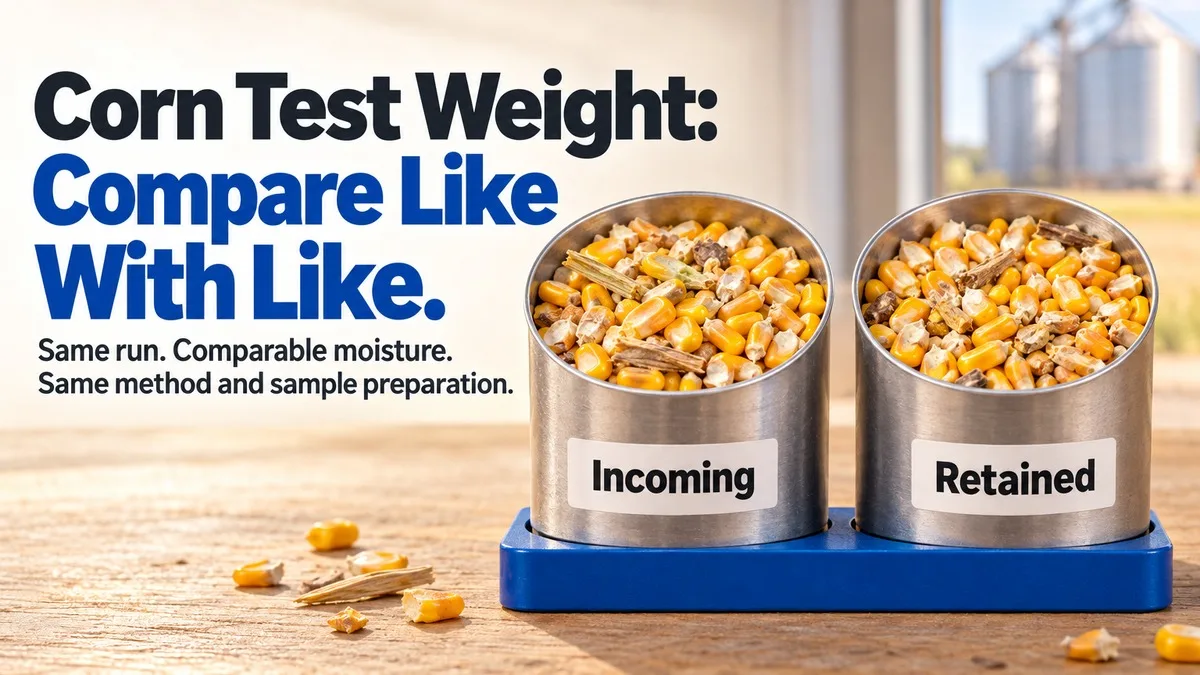
Removing fines, broken kernels and unwanted material can change the bulk density and test weight of a corn lot. Measuring test weight before and after cleaning helps you see how the process affects your grain and whether the cleaned corn is better positioned to meet your buyer's quality requirements. Checking corn test weight before and after cleaning can help you understand the change—but only when the samples are comparable. Compare incoming and retained corn from the same run at comparable moisture, using the same measurement method and sample preparation. For the sale assessment, compare the buyer’s reading on the delivered corn with that buyer’s current terms.
Put moisture and sample details beside each reading
Test weight is the weight of grain filling a standard volume called a Winchester bushel. It is not the total weight of the lot. USDA’s producer guidance notes that test weight can increase as moisture decreases and advises measuring promptly after sampling.
For a useful cleaning comparison, use representative samples of the incoming corn and the corn retained from the same run—not selected handfuls. Label each reading with:
– Sample origin: incoming or retained corn, and the run it represents.
– Moisture at measurement.
– Test-weight method or instrument used.
– Sample preparation, including whether anything was screened out before measurement.
Keep the method and preparation the same for both readings. If moisture differs, do not attribute the entire test-weight difference to cleaning.
Cleaning the lot is different from screening the test sample
For corn, USDA determines test weight before removing broken corn and foreign material from the measurement sample. The FGIS basis-of-determination table lists corn test weight as measured with broken corn and foreign material, abbreviated BCFM.
That rule still applies when the sample comes from corn already cleaned in production. Sample the retained corn as it comes from the cleaning run; leave any remaining broken corn and foreign material in that measurement sample.
For example, measuring the incoming sample as collected but hand-screening the retained sample before measuring creates an unequal comparison. You have changed both the production corn and the preparation of one test sample. Instead, measure both representative samples on the same corn inspection basis. That makes the test-weight change more useful for judging the cleaning run.
Use the delivery ticket for the buyer’s assessment
The buyer’s delivery reading answers a different question: how does the corn actually delivered compare with the buyer’s terms?
Penn State Extension explains that the test weight on a weigh ticket comes from a representative sample taken on arrival and reflects the grain at its current moisture—not a standard moisture. It does not, by itself, establish how much an earlier cleaning run changed test weight.
Get the receiving buyer’s current corn discount schedule and confirm how its receiving method and terms apply. Use that assessment for the delivered load; use your matched incoming-and-retained comparison to understand the cleaning change.
Keep the removal job in view
Test weight is one useful indicator of corn quality, but evaluating the cleaning result also means looking at how much unwanted material was removed and how much valuable corn was retained.
Metra offers different approaches depending on the material in your harvested corn:
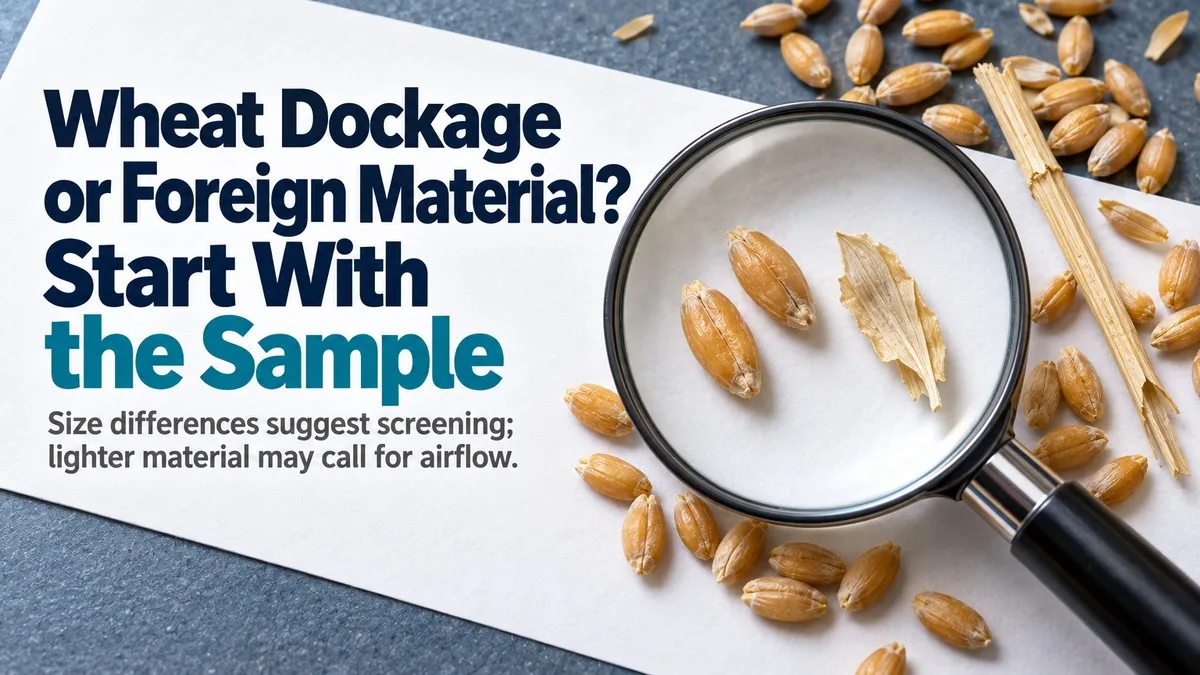
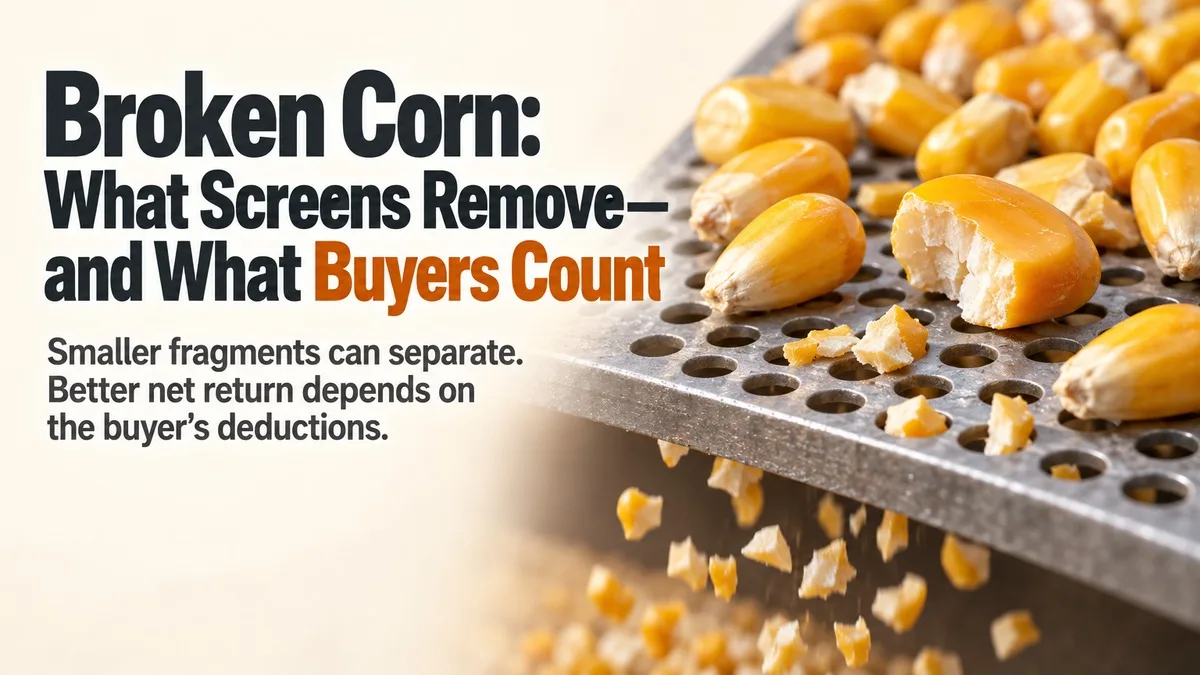
– Metra VDSC uses vibrating screens to remove larger and smaller impurities, broken corn fragments and size-different debris.
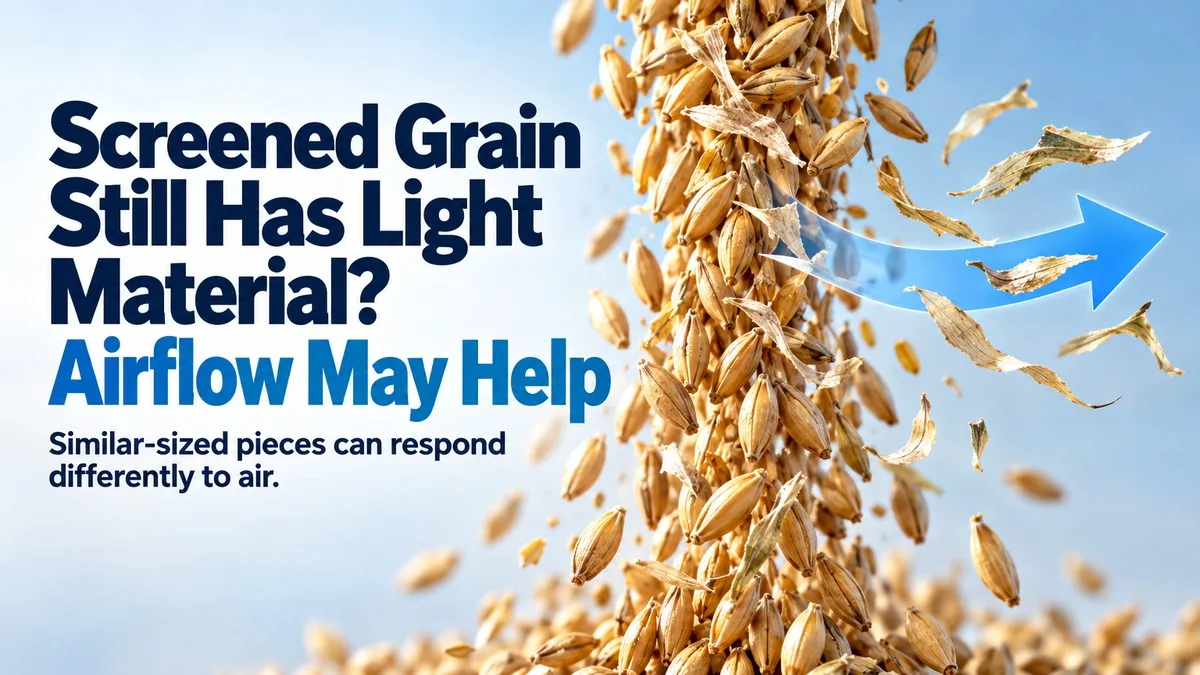
– Metra ADS and ADS-CDC use controlled airflow to separate corn into fractions according to aerodynamic properties. This can help separate lighter, poorly developed or damaged material from useful kernels.
Both approaches can help prepare cleaner, more uniform corn for storage or delivery.
See what cleaning can do for your corn. Metra offers free grain sample testing. During a demonstration, you can compare your original corn with the cleaned material, examine the separated fractions and evaluate the results, including test-weight measurements when available.
The Metra team will help select equipment and settings based on your corn and the material you want to remove.
Contact info@graincleaner.com or call +1 701 515-0488 to arrange a free sample test.