Keep useful beans, then judge their planting value
Planning to save part of your 2026 soybean harvest for planting in 2027? The goal is more than removing dirt and damaged beans. It is to select a promising seed fraction, protect the beans during handling and prepare a more uniform lot for planting.
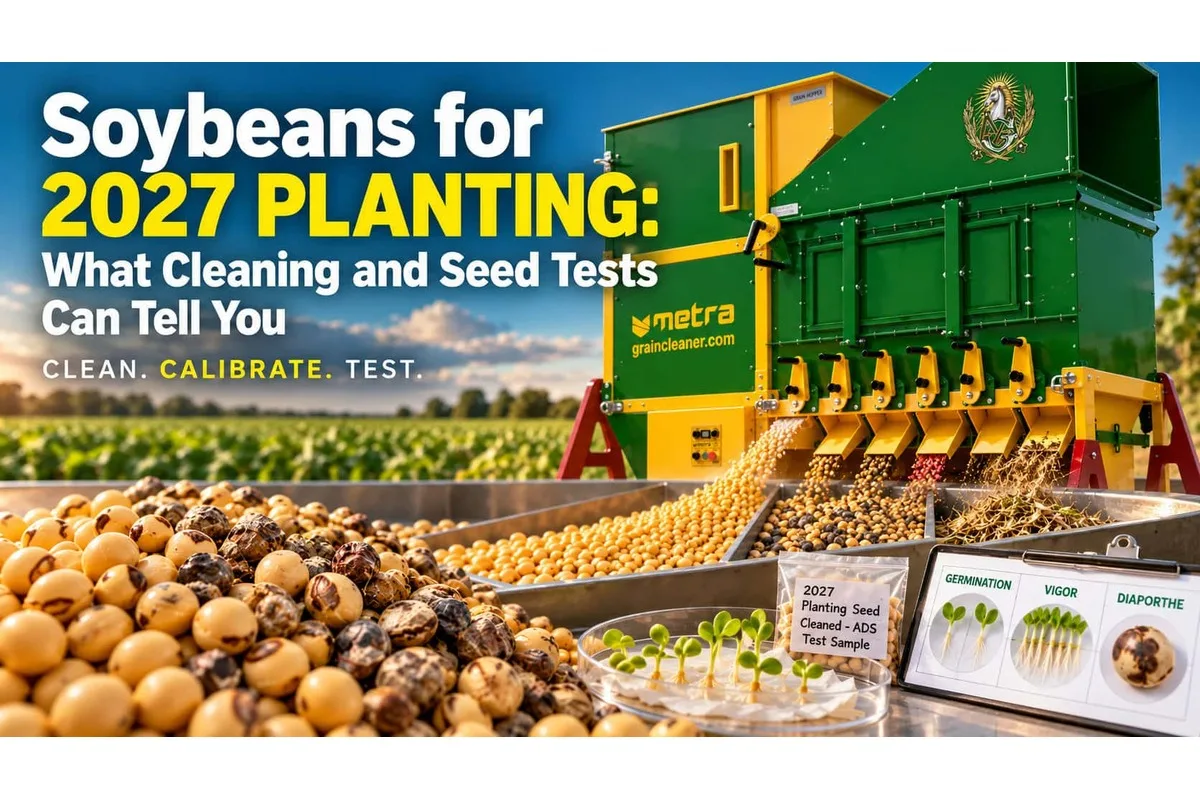
Metra ADS aerodynamic grain cleaners help farmers clean and calibrate soybean seed by separating it into fractions according to how the beans respond to airflow. This allows growers to select fractions with desirable physical characteristics while directing lighter, shriveled and other separable material away from the intended planting seed.
For soybean seed, gentle handling matters. Metra ADS uses a controlled air stream instead of passing the beans over vibrating sizing screens, and its separation chamber includes protective rubber lining to help reduce mechanical impact.
Seed testing then helps evaluate the resulting planting lot. Germination, accelerated aging and disease tests provide information that can guide the final decision about which prepared seed to plant.
What cleaning contributes
Seed calibration is one of the main reasons to use a Metra ADS cleaner when preparing soybeans for planting. Not all beans in a harvested lot have identical physical characteristics. Some are well-developed and sound, while others may be undersized, shriveled, immature or affected by adverse growing conditions. [Metra ADS] (https://metragraincleaner.com/product_category/aerodynamic-grain-cleaners/) and [ADS-CDC] (https://metragraincleaner.com/product_category/aerodynamic-grain-cleaners-with-cyclone-dust-collector/) use adjustable airflow to separate soybeans according to their aerodynamic behavior, which is influenced by seed mass, size, shape and density. The machine directs the material into different fractions, allowing the operator to select the portion best suited to the intended purpose.
This offers several practical advantages when preparing planting seed:
– Selection of promising seed fractions. Separating soybeans by aerodynamic properties helps concentrate beans with desirable physical characteristics in the intended planting fraction.
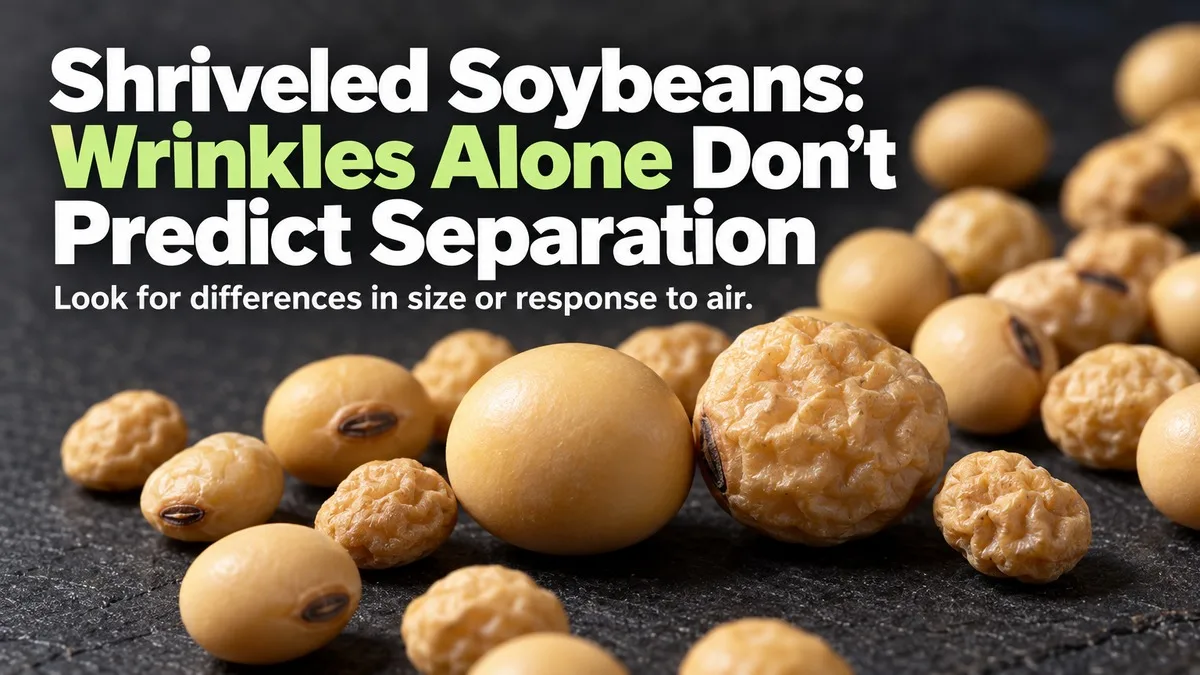
– Removal of separable damaged material. Lighter, shriveled or poorly developed beans can be directed into other fractions when their aerodynamic properties differ sufficiently from sound seed.
– Gentle seed handling. Controlled airflow and protective rubber lining inside the separation chamber help limit mechanical impact during processing.
– Adjustable calibration. Operators can adjust airflow and fraction separation to suit the characteristics of a particular soybean lot.
These advantages make ADS especially relevant when the objective is to prepare seed for planting rather than simply clean commercial grain. The goal is to produce a more uniform, physically selected seed lot with good potential for planting performance. The relationship between seed fraction and actual germination or field performance can then be evaluated through testing. [Metra ADS-CDC] (https://metragraincleaner.com/product_category/aerodynamic-grain-cleaners-with-cyclone-dust-collector/) also includes a cyclone dust collector. Both ADS configurations use aerodynamic separation, allowing farmers to calibrate seeds without relying on sizing screens as the primary separation method.
Where does VDSC fit?
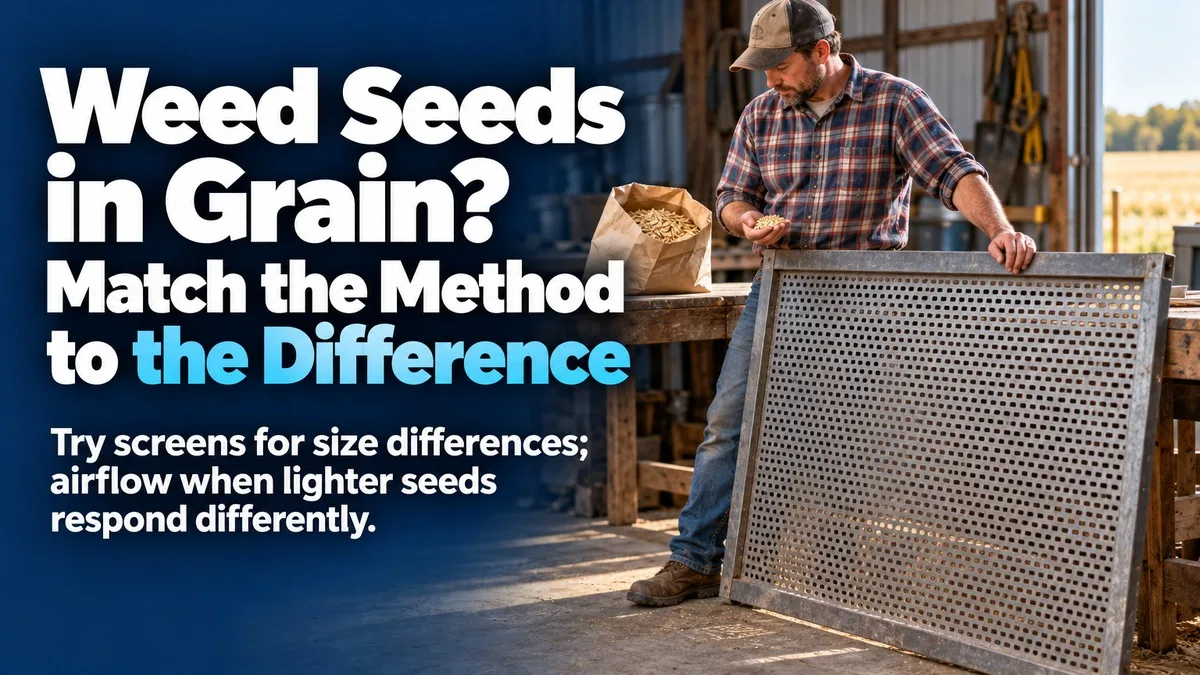
Metra VDSC uses vibrating screens to separate material by size. It can be useful when the harvested soybeans contain impurities or unwanted material with a clear size difference. For seed selection based on aerodynamic characteristics, however, ADS provides a different capability: separating soybeans into fractions even when their sizes overlap, provided they respond differently to airflow.
The appropriate setup depends on the harvested material. A sample test helps determine which fractions can be separated and which settings are most suitable for preparing planting seed.
Request tests that answer different questions
After cleaning and calibration, seed tests help determine which selected fraction is the strongest candidate for 2027 planting. Instead of testing only the original mixed harvest, farmers can evaluate the calibrated planting fraction to understand how the separation process contributes to the quality of the seed they intend to use. Take representative samples from the selected fraction, following the seed laboratory's sampling instructions. If you want to compare the performance of different fractions, submit representative samples from each one separately.
Three tests provide useful information:
– Germination: What percentage of the selected seeds germinates under standard laboratory conditions? Comparing germination results between the original lot and calibrated fractions can help identify whether physical separation concentrated seeds with better germination performance.
– Accelerated aging: How well do the selected seeds germinate after exposure to high temperature and humidity? This test provides information about seed vigor and helps compare how different seed fractions respond to stress. NDSU's soybean seed-quality evaluation explains the method.
– Diaporthe infection: What percentage of the selected seeds is infected? Diaporthe seed decay can produce shriveled, cracked and chalky-looking soybeans and reduce germination and vigor. When affected seeds differ sufficiently in aerodynamic properties, ADS cleaning may help concentrate some of them in separated fractions, reducing their presence in the selected planting material.
This makes cleaning and testing complementary steps. Cleaning and calibration physically select the seed. Laboratory testing helps identify the planting quality of the selected fraction. For example, a farmer can use ADS to separate a soybean lot into different fractions and submit samples for germination and vigor testing. If one fraction produces stronger laboratory results, that information helps determine which material is worth retaining for planting.
The same comparison can be useful when Diaporthe is present. Testing the original material and selected fraction can show whether the cleaning process has reduced the proportion of infected seeds.
Iowa State's September 2026 guidance identifies germination and Diaporthe infection testing as useful tools for evaluating soybean seed quality.
When February retesting changes the decision
For soybean seed affected by wet harvest conditions, the preparation process does not necessarily end immediately after cleaning. Iowa State Extension notes that Diaporthe seed decay can reduce germination and vigor, creating additional concerns for farmers planning to retain seed for the following spring. Its guidance recommends dry-storing soybean seed with low germination associated with Diaporthe and retesting in February. For the 2027 planting season, that means February 2027. Under suitable dry-storage conditions, fungal activity can decline, and germination results may improve in affected lots. Iowa State also advises against planting soybean seed lots with more than 20% Diaporthe infection. That makes disease testing particularly useful when deciding whether a selected seed fraction is appropriate for planting.
Metra ADS can contribute to this preparation process before the final planting decision is made.
By separating soybeans into aerodynamic fractions, ADS gives farmers an opportunity to retain physically promising seeds and divert separable shriveled or damaged material. Comparing the resulting fractions through laboratory testing helps reveal the value of that selection.
For farmers saving soybeans for 2027, the practical approach is:
– Clean and calibrate the harvested soybeans using an appropriate Metra ADS setup.
– Select the fraction with desirable physical seed characteristics.
– Test representative samples for germination, vigor and Diaporthe infection where relevant.
– Store the selected seed under suitable conditions and repeat testing when recommended before planting.
Discuss a grain sample test
Metra offers free grain sample testing to help farmers evaluate cleaning and aerodynamic calibration using their own harvested material. During a demonstration, you can see how your soybeans separate into fractions, which damaged or unwanted material is removed, and how much useful seed is retained in the selected fraction. These results help determine the equipment and settings best suited to preparing your soybean seed for planting.
Contact Metra at info@graincleaner.com or call +1 701 515-0488 to arrange a free sample test. The team will help coordinate sample quantity, shipping and demonstration arrangements.