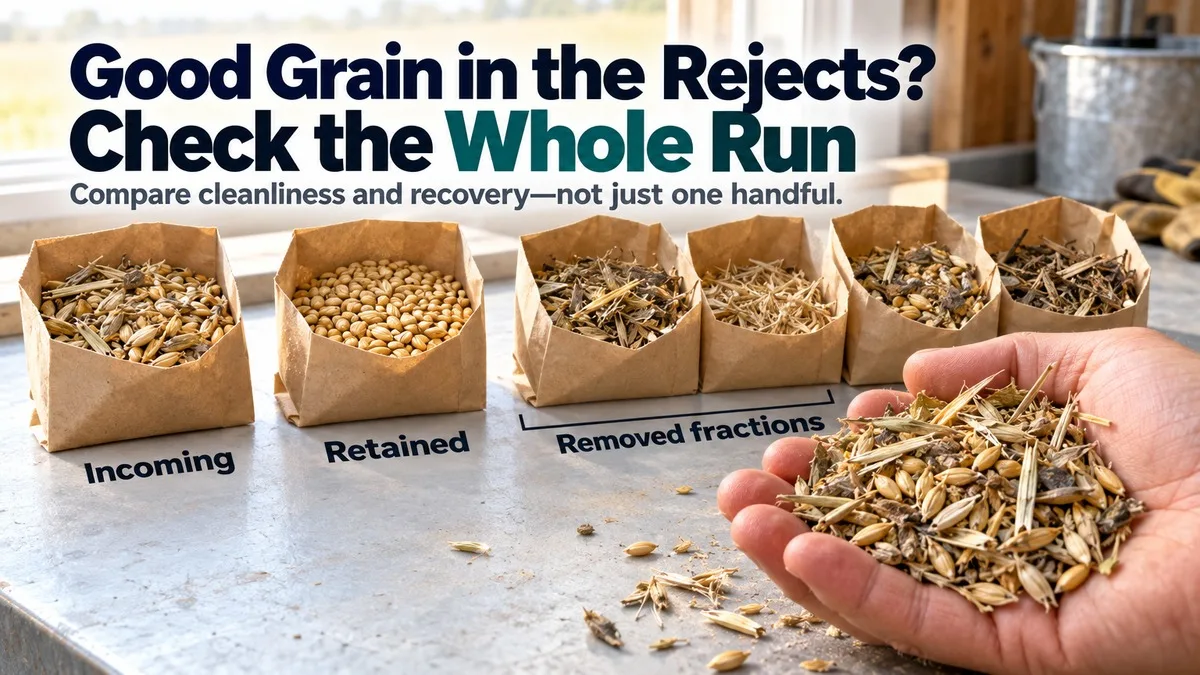

Some splits can come out before the bin
When split soybeans are mixed with whole beans, screening can remove smaller pieces and small debris before storage while retaining whole beans. The useful opportunity is a size difference—not simply the presence of splits. That cleaning step reduces unwanted material entering the bin, but the retained soybeans still need moisture management, cooling and storage checks.
Look at the size of the broken pieces
Two situations help explain when screening is useful:
– Smaller split pieces: Fragments that pass through a screen opening while whole beans stay on the screen give you a useful separation. Small debris can come out with them.
– Pieces close to whole-bean size: When the sizes overlap, screens have less room to separate the pieces from the beans you want to keep. Some splits can remain with the whole beans.
The decision starts with the material already in your load: are the unwanted pieces distinctly smaller than the whole beans?
Metra VDSC cleaners use vibration and screens to separate by size. VDSC can work alone for this cleaning job; an additional airflow cleaner is not automatically required.
Why remove them before storage?
Removing small debris helps keep material that can obstruct air circulation out of the grain store. It also takes removable split pieces out before they become part of the stored lot.
In its October 2026 wet-weather guidance, Iowa State Extension recommends pre-storage screening to remove foreign material and split beans. That recommendation appears in its purple-seed-stain discussion, where cleaning helps reduce pockets of moisture and foreign material that can protect molds and fungus. The benefit is removing unwanted material—not repairing damaged beans.
Dry for the storage period, then keep cooling and checking
Screening does not dry or cool the retained soybeans. Keep those jobs separate from cleaning:
– Match moisture to the storage period. Iowa State recommends 13% moisture or lower for soybean storage and 11–12% for long-term storage. University of Minnesota Extension advises artificial drying when soybeans are harvested and stored above 13% moisture.
– Avoid adding more splits during drying. Follow the dryer manufacturer's maximum-temperature guidance and watch the beans leaving the dryer for cracking and splitting. NDSU recommends managing dryer temperature based on the damage occurring.
– Cool with aeration—moving air through the stored grain—as outdoor temperatures allow. For a concrete fall-cooling example, Iowa State's October 2026 wet-fall guidance for purple-seed-stained soybeans recommends cooling bin temperatures to 35–40°F as outdoor temperatures cool. That is a target for those conditions, not a nationwide final winter temperature. Reaching the moisture target does not mean the beans have finished cooling.
– Continue monitoring stored-grain temperature. Iowa State recommends ongoing monitoring to help identify hot spots and deterioration.
A cleaner lot still needs a storage plan that fits its moisture, temperature and intended storage period.
Get help with your soybean lot
Metra can help select screening equipment and settings for your beans. Contact info@graincleaner.com to arrange a free grain sample test. The manager will help agree on the sample quantity and shipping or demonstration arrangements.