
Remove coarse debris before it reaches the heat
When harvested soybeans carry oversized pods and coarse trash, screening before drying can remove that material while keeping the beans moving toward the dryer. Favor this timing when debris would otherwise enter and accumulate in the dryer—and fit the cleaner into a grain route that avoids extended wet holding.
The timing depends on which problem you need to solve
For a dryer-debris problem, screening belongs upstream. NDSU Extension warns that soybean pods and other trash can accumulate in a dryer and become combustible. Removing oversized material before heating addresses that concern at the inlet. Screening afterward cannot address debris already carried through the dryer.
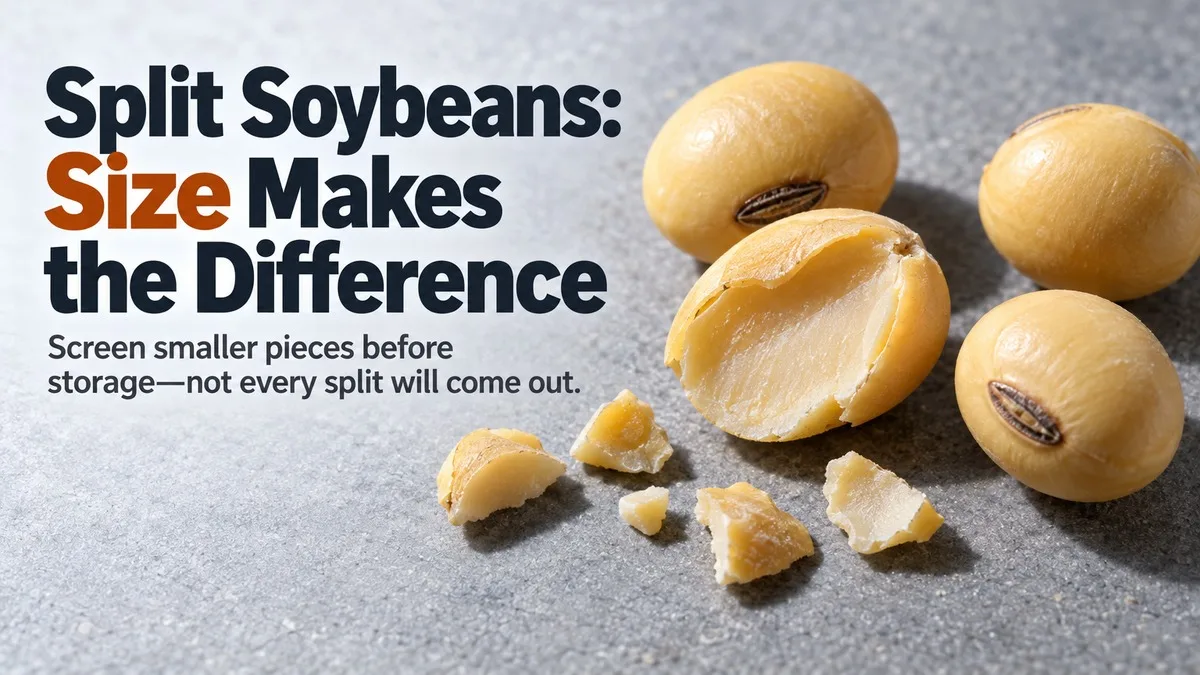
For a finishing job, later cleaning can still serve a purpose. For example, removing smaller split-bean pieces before storage is a different task from keeping coarse pods and straw out of the dryer. If coarse debris is not the dryer concern, choose the later cleaning step around the material that still needs removal.
The key size-screening distinction is simple: beans pass through suitable openings while oversized material stays above them. That makes oversized pods and coarse debris the target—not every pod fragment or all trash.
Keep dryer care in place
Upstream screening complements the dryer-management steps in NDSU's guidance:
– Prevent trash from accumulating.
– Keep soybeans flowing through every section of the dryer.
– Monitor the dryer continuously.
– Clean it frequently, using lockout/tagout before working on the equipment.
Follow the dryer manufacturer's maximum-temperature recommendations. Also check beans leaving the dryer for cracking and other drying damage, and manage temperature according to the damage occurring.
Fit cleaning into the grain route you already have
Start by identifying a possible transfer point ahead of the dryer. Sketch four things: where grain would feed the cleaner, where cleaned beans would go, where removed trash would collect, and the handling rate needed to keep grain moving.
Capacity matters because cleaning should not create an extended wet-grain backlog. Iowa State's wet-weather handling guidance advises against holding wet grain for extended periods before drying because it further reduces storage life. Match the screen and useful cleaning rate to your material rather than relying on a catalog capacity alone.
Metra GPC removes large impurities with a grading mesh and can discharge grain into another receiving device. It can operate independently, so this job does not require buying an entire Metra cleaning line. The GPC manual calls for a prepared mounting area or bunker and feed and discharge conveyors that support continuous separation.
Metra helps match equipment and configuration to your grain, existing equipment and site. To discuss removing coarse soybean debris before drying, contact info@graincleaner.com. You do not need to choose a model or design a complete line first.