Turn the buyer’s report into a cleaning opportunity
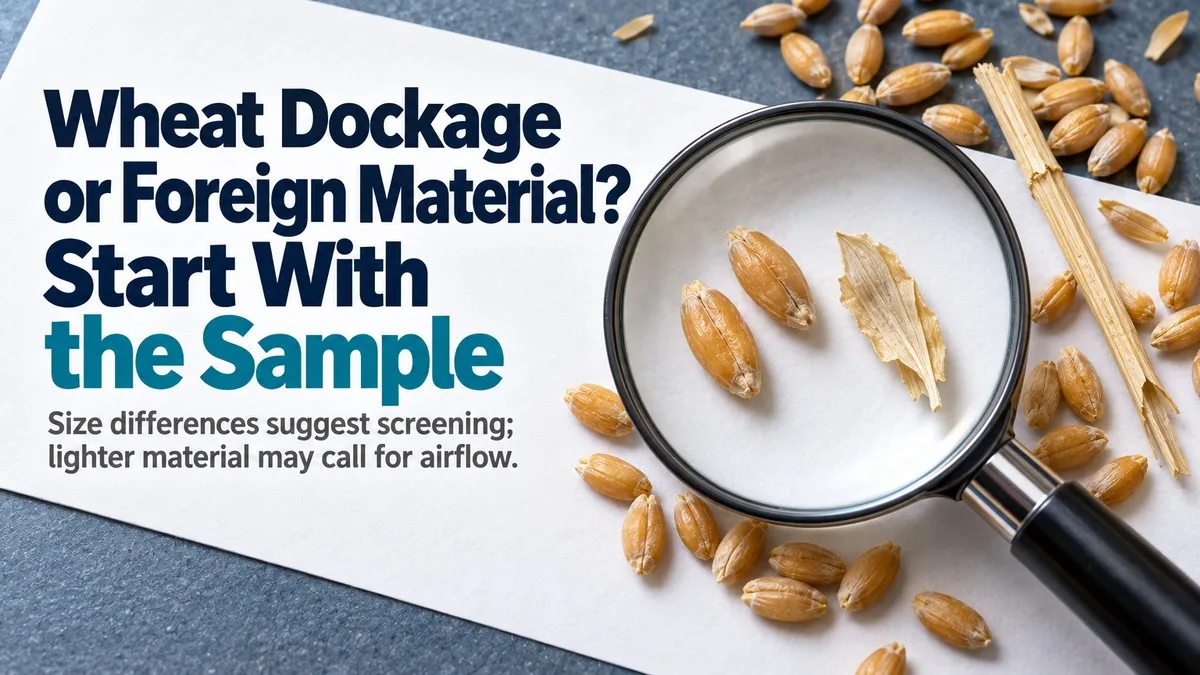
A wheat buyer's dockage or foreign-material report can reveal an opportunity to improve the quality of your grain before delivery. Depending on the buyer's terms, dockage may reduce payable weight, while foreign material can affect wheat grade and pricing. The next step is to identify what is mixed with your wheat and how it can be removed. Metra offers size-based cleaning with VDSC and aerodynamic separation with ADS and ADS-CDC. These technologies help remove unwanted material while retaining valuable wheat. Understanding the reported factors helps you choose a cleaning approach that addresses the actual problem – and a Metra sample test lets you see the separation using your own grain.
The distinction comes from the inspection sequence
Under the USDA wheat standards, dockage and foreign material describe different portions of the sample—not two names for everything mixed with wheat.
1. Dockage is removed from the original sample using an approved device and prescribed inspection procedures. It includes non-wheat matter, plus underdeveloped, shriveled and small wheat pieces removed with it that cannot be recovered by proper rescreening or recleaning. Dockage can therefore contain some wheat, not just debris.
2. Shrunken and broken kernels are a separate inspection fraction defined as all matter passing through the prescribed inspection sieve. This is not simply a visual count of kernels that look small or broken.
3. Foreign material is all matter other than wheat remaining after dockage and shrunken and broken kernels have been removed.
The key distinction: dockage comes out during the approved dockage procedure; foreign material remains after both specified removals. Those categories explain how inspectors count material. They do not prescribe which production cleaner should remove it.
These distinctions matter when evaluating your wheat's selling value. Dockage is reported separately from the official grade and may be deducted from the weight used for settlement. Foreign material, along with shrunken and broken kernels, contributes to the grade-defining factors. Check your buyer's discount schedule to see which factors affect your payment and where cleaning could improve the delivered grain.
Ask to see the material, then compare it with useful wheat
Ask the buyer which factor was reported and to show you the dockage portion, the shrunken-and-broken portion and the foreign material identified in the remaining sample. Keep the conversation tied to a sample representing the load. USDA’s producer guidance identifies representative sampling as essential to accurate inspection results.
Compare the unwanted material with the wheat you want to retain. Different physical characteristics create opportunities for different cleaning technologies.
Metra VDSC — separation by size.
When your wheat contains larger or smaller impurities, Metra VDSC uses vibrating screens to separate those materials from the useful grain. This can help remove chaff, weed seeds, small debris and other size-different impurities.
Metra ADS and ADS-CDC — aerodynamic separation.
When unwanted material differs in its response to airflow, Metra ADS-CDC offers another approach.
ADS uses controlled airflow to separate wheat into fractions according to aerodynamic properties influenced by mass, size, shape and density. This makes it useful for removing lighter unwanted material and separating certain shriveled, underdeveloped or damaged kernels from sound wheat. Adjustable airflow and fraction settings allow Metra to adapt the separation process to the harvested material. ADS-CDC also includes a cyclone dust collector.
The goal is cleaner, more valuable wheat—not simply removing the largest amount of material.
A cleaning demonstration helps identify which unwanted fractions can be removed while keeping useful wheat in the intended output. Metra can recommend VDSC, ADS or another suitable cleaning setup based on the material in your sample.
Bring the cleaning problem—not a model number
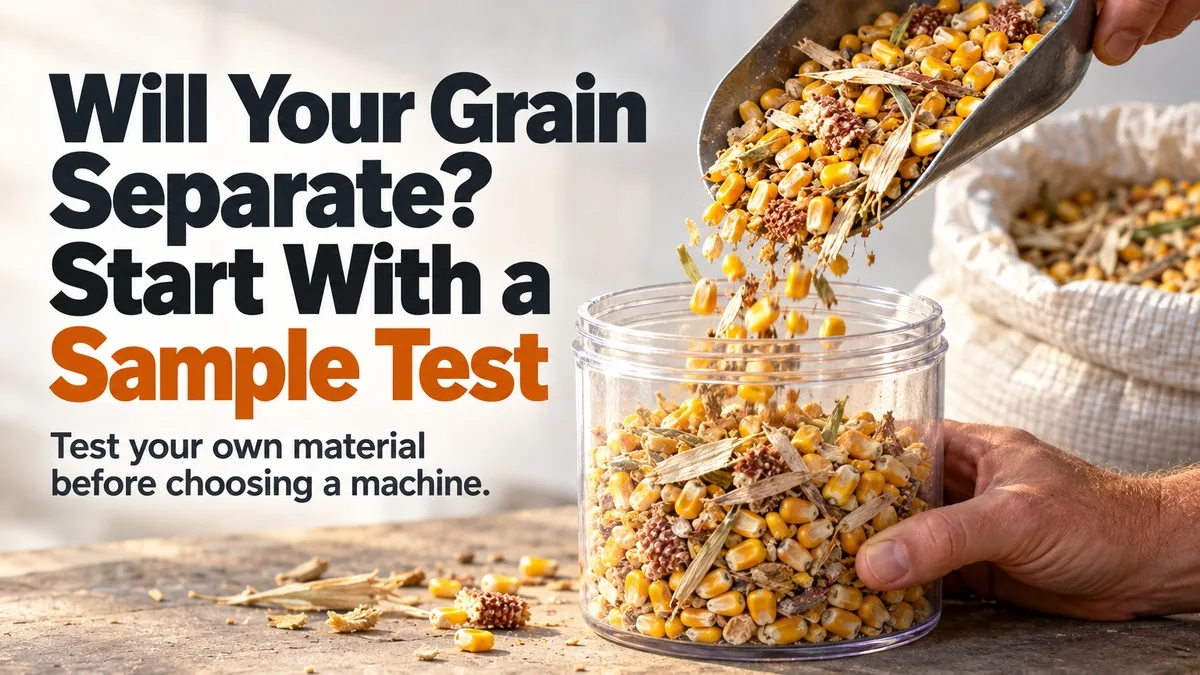
You don't need to choose a grain cleaner before contacting Metra. Start with your wheat, the buyer's reported quality factors and the material you want to remove.
Metra offers free grain sample testing to help you find the right cleaning solution.
During the demonstration, you can see:
– How the equipment separates unwanted material from your wheat.
– What the cleaned grain looks like compared with the original sample.
– Which fractions are removed and how useful wheat is retained.
– Which equipment and settings are suitable for your cleaning needs.
Whether your wheat contains dockage, foreign material, lighter damaged kernels or a combination of impurities, Metra can help evaluate the cleaning approach using your actual grain.
See how your wheat can be cleaned before choosing a machine.
Contact Metra at info@graincleaner.com or call +1 701 515-0488 to arrange your free grain sample test. The team will help coordinate sample quantity, shipping and demonstration arrangements.