Start with a prompt call
If harvest damage or grain quality concerns could lead to a crop insurance claim, contact your agent promptly. Keep harvest records, quality results and grain samples available. Before moving, mixing or cleaning affected grain, ask what your policy requires so you can document the loss and understand which steps must happen first.
Don't wait for the paperwork to be complete
USDA's Risk Management Agency tells growers to report losses immediately and contact their crop insurance agent about specific obligations. Make that call even if final settlement sheets aren't available yet.
In its September 28, 2026 Iowa harvest guidance, Iowa State University Extension explains why timing matters: depending on the policy and crop provisions, some quality losses may need documentation and adjustment before harvest. An adjuster may need to inspect the crop first. Waiting can make losses harder to document or affect eligibility for certain claim payments.
If the grain is already harvested, explain where it is and what you plan to do next. Ask which notice deadlines and handling requirements apply to your situation.
Build one record packet for each affected lot
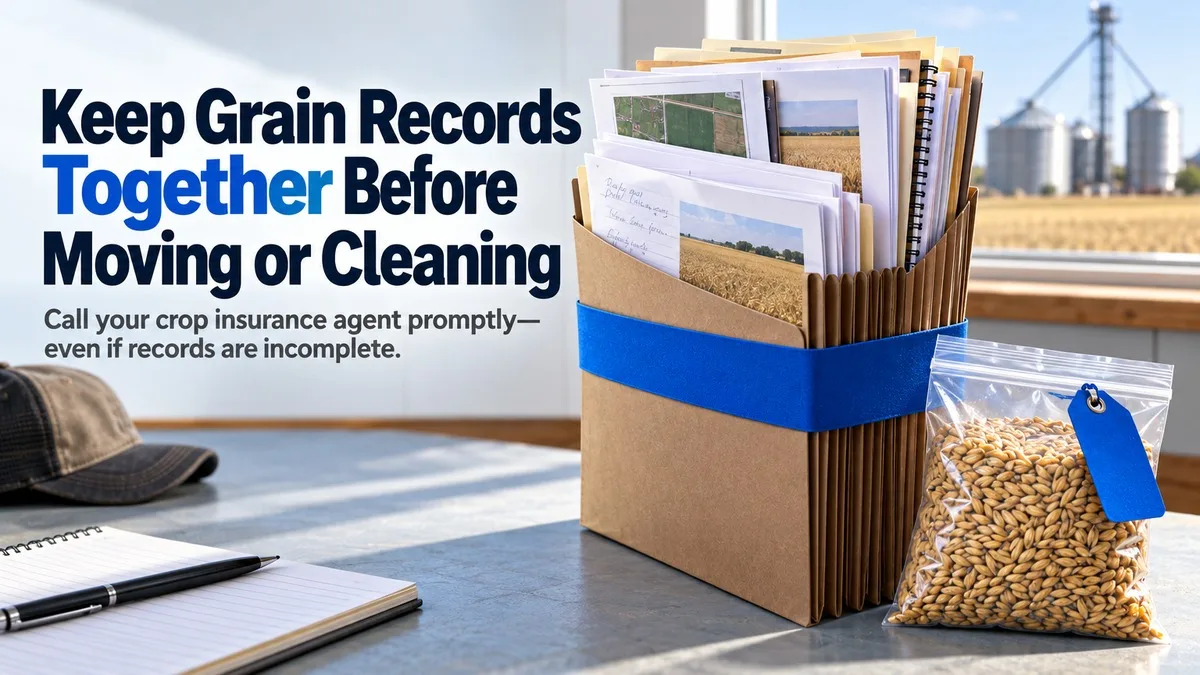
A simple organizing method is one paper or digital folder for each affected lot, identified by crop and field or storage location. This keeps related information easy to find during the agent call.
Iowa State Extension recommends keeping these supporting records:
- Grain settlement sheets.
- Moisture test results.
- Yield-monitor data.
- Harvest dates.
- Field notes.
- Photos or videos of conditions affecting harvest, such as standing water, lodged crops, stalk deterioration or ear rot.
The Extension guidance also recommends preserving grain samples whenever quality concerns exist. Add a note to the folder showing where those samples are kept. Ask the agent how samples must be collected, identified and preserved for the claim rather than assuming an existing sample meets the requirements.
Keep adding records as they become available. The folder helps organize the evidence; your agent can identify any additional records needed for your coverage.
Use this worksheet before the next handling step
Start the call with a short description:
Crop and affected field or lot: ______
Quality concern and when you first noticed it: ______
Harvest status and current grain location: ______
Planned next step and timing: ______
Then ask:
- Notice and deadlines: What loss notice do I need to submit now, how should I submit it, and which deadlines apply?
- Inspection: Does an adjuster need to inspect the crop or grain before harvest or before the planned movement, mixing or cleaning?
- Samples and tests: Who must collect samples? What quantity, collection method, identification and preservation are required? Which tests and testing providers are acceptable?
- Measurements and records: What quantities, quality results, photos or other records do you need before and after the planned handling?
- Authorization and continued care: Is authorization required for my next step? What should I do in the meantime to minimize further damage while keeping the loss measurable?
- Follow-up: Who is responsible for each next step, and when should I contact you again?
Write down the agent's name, call date, instructions and deadlines in the same folder. Use the answers to put inspections, sampling or other required steps ahead of the planned handling. You'll have one place to find both the evidence and the instructions for what comes next.