Separate sale grain from grain already spoken for
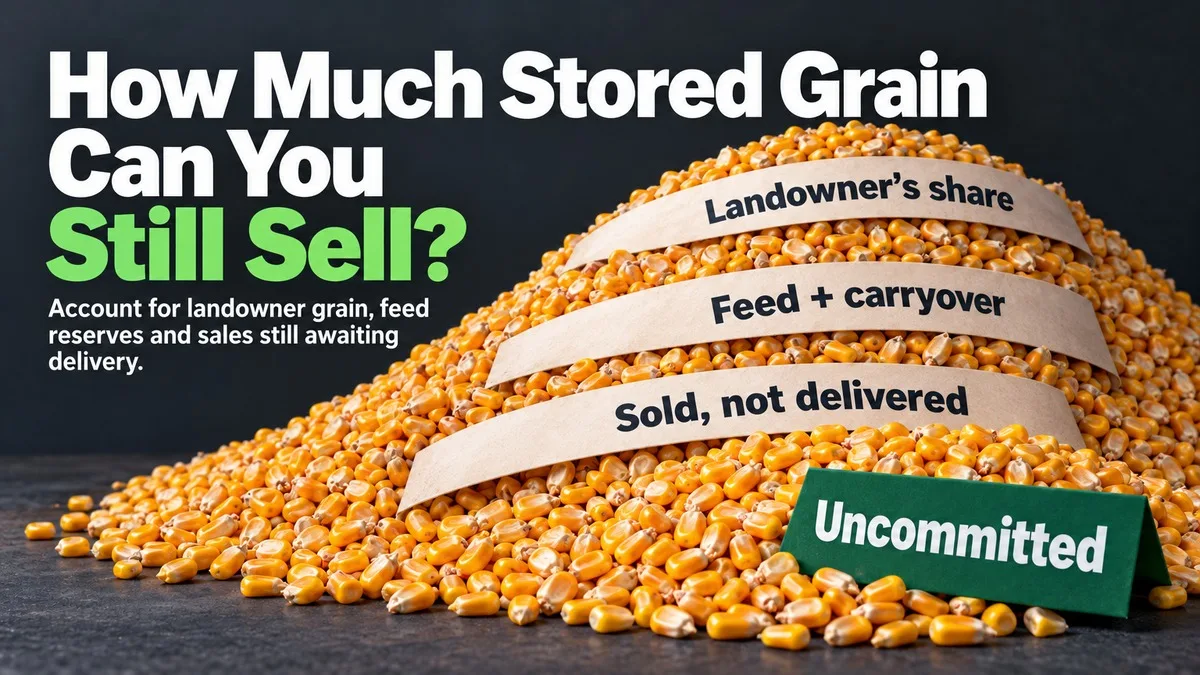
If you raise crops and livestock, you can estimate sale bushels by separating stored grain into what belongs to you, what you need for feed and what remains. Start with a dated inventory for each crop. Exclude the crop-share landowner’s grain and reserve feed and carryover, then subtract existing undelivered sales to find bushels you can still commit.
Start with the grain on hand and identify its owner
Write down the crop, inventory date and bushels currently in storage. Iowa State Extension’s Twelve Steps to Cash Flow Budgeting recommends starting with an inventory of stored crops and livestock on hand. The current-assets section of a recent balance sheet can provide starting information.
Check whether your grain total includes the crop-share landowner’s bushels. If it does, subtract those bushels using your ownership records. If the inventory already lists only your share, make no second ownership deduction.
Keep expected harvest production in a separate column from grain on hand. Future production belongs in the after-harvest estimate, not in today’s stored-grain total.
Match the feed reserve to the animals and feeding period
Choose the feeding period the estimate will cover. Use your past feed records and proposed livestock program to estimate how much of each crop you’ll need during that period.
Iowa State recommends adjusting feed requirements for animals that will complete only part of their feeding program during the budget year. It also recommends separating homegrown feed needs before harvest from those after harvest. That split shows how much feed must come from existing supplies before the new crop is available.
Allow for grain carried over as next year’s feed. Deduct that reserve separately only if it isn’t already included in your feed estimate. Count each reserved bushel once.
Use a bushel worksheet for each crop
Copy these rows for each crop and fill them with your own records. The corn quantities below are hypothetical, not recommended feed allowances. The starting inventory includes both the farmer’s and landowner’s grain.
Example: Calculating Uncommitted Corn Inventory
Consider a hypothetical corn operation with the following inventory:
- – 30,000 bushels — Total corn in storage on the inventory date.
- – −6,000 bushels — Grain owned by the landowner and included in the total inventory.
- – −10,000 bushels — Grain reserved for feed needs and next year's feed carryover, counted only once.
Grain available for sale: 14,000 bushels
From this amount, subtract:
- – −4,000 bushels — Grain already sold but not yet delivered.
Final result: 10,000 bushels of uncommitted corn.
This is the remaining inventory that has not been allocated to feed, landowner obligations, or existing sales contracts.
The calculations are:
30,000 bushels − 6,000 bushels − 10,000 bushels = 14,000 bushels available for sale.
14,000 bushels − 4,000 bushels already sold but undelivered = 10,000 uncommitted bushels.
“Available for sale” separates grain intended for sale from ownership and feed allocations. “Uncommitted” goes one step further: it excludes sale grain you’ve already promised to a buyer. Subtract only outstanding sales that will be filled from the inventory you’re calculating.
Let the balance guide the next decision
If your grain share falls short of feed needs, record the difference as a feed shortage rather than a negative amount to sell. Iowa State recommends estimating needed feed purchases and considering whether the livestock program should change to fit the available feed.
If grain remains, check outstanding sales before offering more bushels. In the hypothetical example, 14,000 bushels are allocated to sales, but only 10,000 remain available for a new commitment. Use that second number when deciding how much additional grain to offer.