
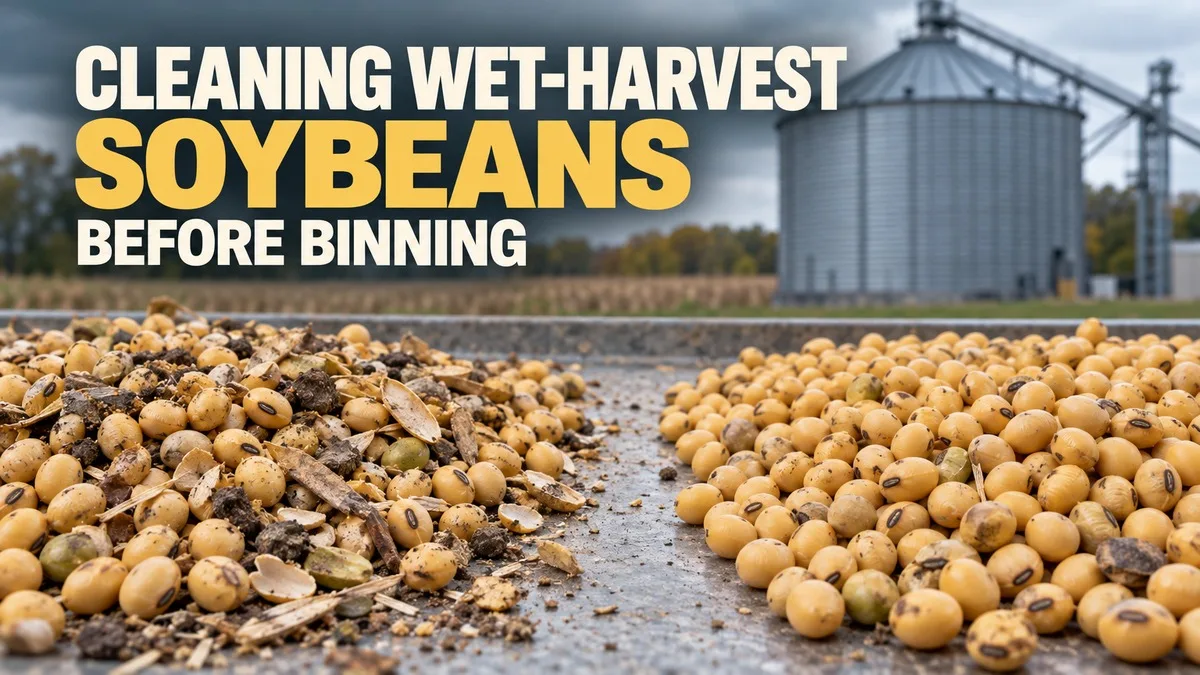
Remove small debris before storage
After a wet harvest, cleaning dust and small debris out of soybeans before filling the bin is one of the smartest moves you can make. Removing fines helps air circulate evenly through the grain mass, preventing hot spots. Cleaning preps the lot for storage, while moisture levels determine whether you need to run the dryer – especially if you’re dealing with sprouted or mold-damaged beans.
Use size screening for the debris
Different soybean quality problems call for different cleaning methods. Metra VDSC vibration cleaners use screens to remove dirt, fines, broken fragments and other size-different impurities. A standalone VDSC can be a practical option when removing small debris is the main goal before storage.
Metra ADS and ADS-CDC aerodynamic cleaners offer a more versatile approach when the lot also contains poorly filled, shriveled or physically damaged soybeans. Adjustable airflow separates material according to its aerodynamic properties, which are influenced by kernel mass, density, size and shape.
This allows ADS to separate lightweight impurities and select different soybean fractions, helping retain fuller, useful beans while removing unwanted material. Some fungus-damaged seeds may also be separated when the damage has changed their physical properties. Both approaches can help prepare soybeans for storage by removing unwanted fractions and improving the uniformity of the retained grain. The appropriate choice depends on what is present in the harvested lot and which material needs to be removed.
Keep the drying decision separate
University of Minnesota Extension's soybean drying guidance, reviewed in 2025, recommends artificial drying when soybeans are harvested and stored above 13% moisture. A cleaner-looking lot still needs that moisture decision.
Minnesota Extension's October 5, 2026 grain-quality update explains why wet-harvest damage matters: repeated rewetting after maturity can make soybeans germinate in the pod, then dry and mold. The update urges careful management of moisture and foreign material – unwanted material mixed with the beans. Infected seed can decay faster in high-moisture areas within bins, while dry, cool soybeans do not tend to decay further. If harvest is continuing, Extension also recommends proper combine settings to limit foreign material and harvesting at appropriate moisture to reduce splitting and cracking.
See what cleaning removes from your soybeans
Arrange a free test of your own soybeans with Metra to see how cleaning can help prepare your grain for storage. Our team can demonstrate VDSC size screening or ADS aerodynamic separation, depending on your material. You'll be able to compare the original sample, cleaned soybeans and removed fractions to see how much useful grain is retained and which impurities or damaged beans can be separated.
You don't need to choose a machine first. Metra will help select suitable equipment and settings based on your grain condition, cleaning goals, required throughput and site needs.
Contact info@graincleaner.com to arrange your free sample test.